Table Of Content
- What Were Safety Precautions Like on the Titanic?
- Titanic vs Modern Cruise Ships: Size & Other Differences
- Additional Costs: Amenities, Excursions, and Dining
- Was the Titanic slower or faster than today's cruise ships?
- Accommodation Capacity: Titanic vs. Modern Cruise Ships
- Cutting-edge entertainment systems for an immersive experience
Third class (sometimes known as steerage) was mostly made up of immigrants moving to North America. On Icon of the Seas, you can enjoy full-scale shows across four distinct venues, and more live music and comedy than ever before. Fifty live musicians and comedians will entertain guests in venues across the ship.
What Were Safety Precautions Like on the Titanic?
7 wild facts about the world's biggest cruise ship - The Washington Post
7 wild facts about the world's biggest cruise ship.
Posted: Thu, 13 Jul 2023 07:00:00 GMT [source]
In comparison, the lifeboats on the Titanic were made of wood and canvas and were not equipped with modern safety features. As a lover of history and travel, I’ve always been fascinated by the Titanic and its tragic sinking. With its grandeur and opulence, the Titanic was once the largest and most luxurious ship of its time. However, as technology has advanced, modern cruise ships have surpassed the Titanic in size and amenities.
Titanic vs Modern Cruise Ships: Size & Other Differences
Unfortunately, there were no safety drills on the Titanic, and many passengers were unaware of the location of lifejackets or the proper procedures for evacuating the ship. Despite being separated for over 100 years, both ships have redefined marine transportation by allowing passengers to travel in unprecedented comfort and extravagance. Although all of this may seem pretty basic by modern standards, in 1912, the Titanic achieved a level of luxury that was truly unheard of in an ocean liner. On the other hand, the Icon of the Seas can carry more than triple this number of passengers alone.
Additional Costs: Amenities, Excursions, and Dining
Some vessels boast adrenaline-pumping activities like zip lines suspended high above the ship’s decks, providing passengers with an exhilarating rush as they soar through the air. Others offer surf simulators where you can ride artificial waves right onboard – a truly unforgettable adventure not available on older ocean liners. While the Titanic offered limited entertainment options for younger passengers, modern cruise ships go above and beyond to ensure children have a memorable experience. Dedicated children’s clubs and activities keep young travelers entertained throughout the voyage. From arts and crafts workshops to interactive games and sports tournaments, there is never a dull moment for kids onboard.
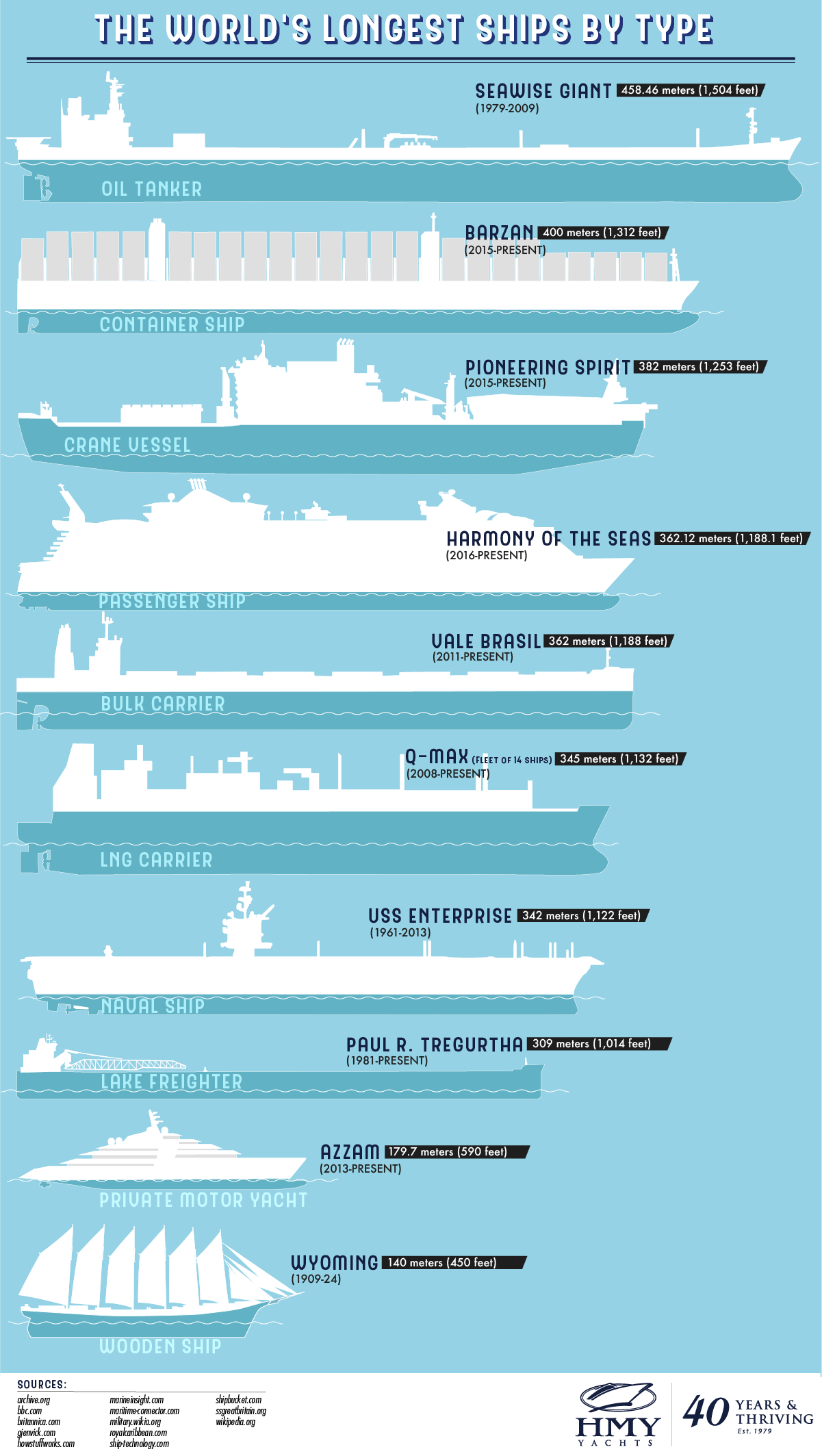
Additionally, freshwater aboard the vessel was scarce, meaning guests of all classes bathed in seawater. Modern cruise ships are on average 20% longer and twice as wide as the Titanic. In addition to these amenities, first-class passengers had access to a smoking room, veranda cafes, a dining saloon, a restaurant, and a room to write and read. There were also squash courts, a gym, and a swimming pool for more active passengers. The Allure of the Seas, the fourth vessel in the Oasis class of cruise ships from Royal Caribbean International, was constructed at the STX Europe shipyard in Turku, Finland.
The Titanic, while deemed unsinkable in 1912, was equipped with safety features that were advanced for its time but are considered inadequate by today’s standards. It carried only 20 lifeboats, which could accommodate less than half of the vessel’s total number of passengers and crew. This was actually more than British law required at the time, which mandated enough lifeboats for 30% of a ship’s capacity. On the other hand, modern cruise ships are built with double-hull technology and multiple watertight compartments that extend up the side of the hull.
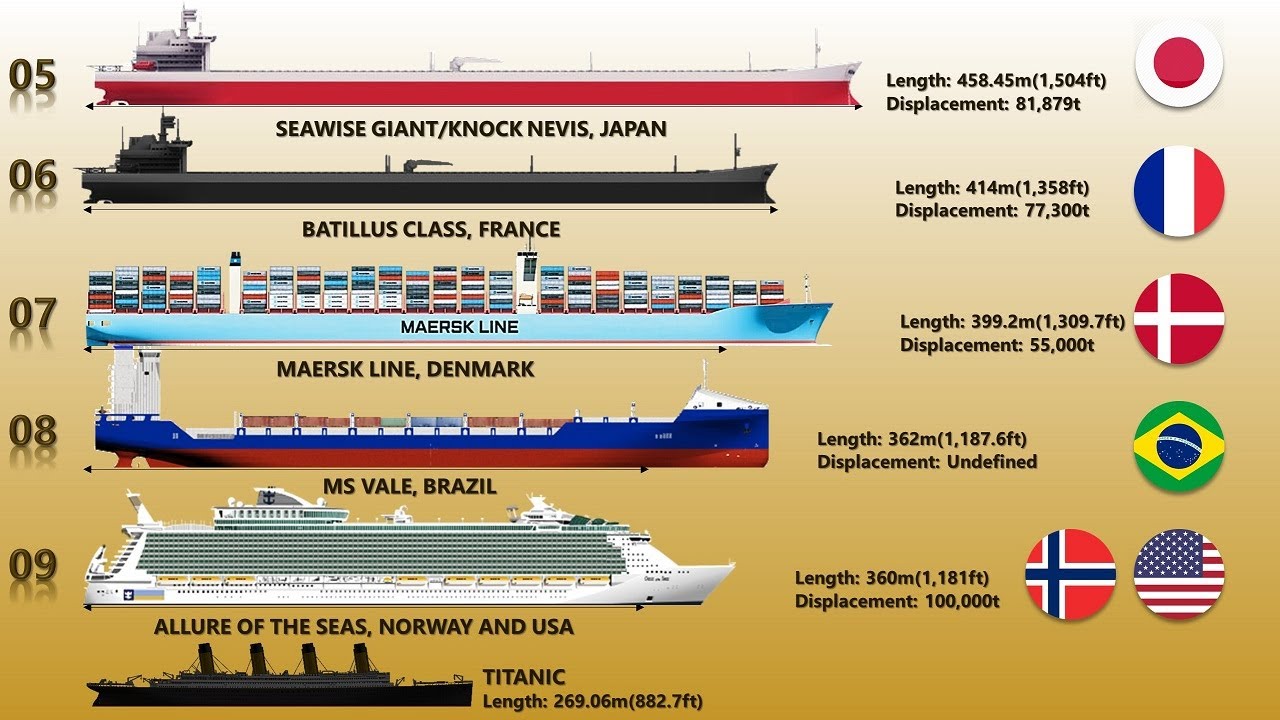
Accommodation Capacity: Titanic vs. Modern Cruise Ships
The cabin facilities on the Titanic varied significantly across its class system. First-class passengers enjoyed spacious, beautifully decorated rooms with fine furnishings that resembled luxury hotel rooms. Second-class cabins, while less opulent than those in first-class, still offered a good level of comfort with features such as oak paneling and private washbasins. In contrast, third-class accommodations were smaller, consisting primarily of bunk beds in small, cramped rooms without the luxurious amenities found in first-class. Modern cruise ships are equipped with satellite phones, Wi-Fi, and data links that enable continuous, worldwide communication.
Other diversions included a pool, promenade, reading/writing room, smoking lounge, and squash court. After Titanic’s tragic sinking, the White Star Line was merged with Cunard Cruise Line, which is known for currently operating Queen Mary 2. Cunard is now operated under Carnival Corporation, which also operates other lines such as Carnival Cruise Line, Holland America Line, Princess Cruises, and Costa Cruises. It was a revolutionary ship, incredibly big for that era and with many features that had not been seen before.
Titanic vs. Cruise: the Gross Tonnage
However, today’s maritime practices rely on sophisticated radar technology that can identify objects in a ship’s path from a significant distance. This enables crews to take necessary evasive actions promptly, preventing collisions with other vessels or obstacles such as icebergs. The advanced radar systems used on contemporary cruises greatly enhance navigation safety compared to what was available during the time of the Titanic.
When comparing the size and depth of swimming pools on modern cruise ships to those available on the Titanic, there’s no doubt that bigger is better. Today’s cruise ship pools offer ample space for passengers to splash around, swim laps, or simply float lazily under the sun. Modern cruise ships constantly push boundaries by introducing thrilling and unique features that were unimaginable during the time of the Titanic.
Virgin Voyages has eliminated buffets and the main dining room in favor of over 20 restaurants, each with a unique menu and dining experience. They’ve even enlisted the help of Michelin-starred chefs to create outstanding meals for passengers. Passengers had assigned seating arrangements, and food was only served at specific times. The Titanic was the largest and most complex cruise ship when she set sail in 1912 but shipbuilding has changed a lot since she set sail. While the unprecedented size of the Titanic and the tragic circumstances of her sinking tend to be what the ship is most remembered for, its most remarkable feature was its opulence during its time. Like the Titanic did in its heyday, the Icon of the Seas is now considered a giant.
To address this issue, the modern cruise industry has made substantial strides in integrating environmentally friendly technologies into their vessels. From waste management systems to energy-efficient features, these innovations aim to reduce pollution while maintaining high standards of comfort for passengers. A la Carte Restaurant was open to first-class passengers only and was one of the earliest examples of for-a-fee dining on a cruise ship (really!). An alternative to the main dining room, it was smaller and served the most fashionable of French decor.
The price of a suite on a modern ship is much lower than Titanic’s first-class cabins, at about $25,000 for a 7-night itinerary. According to Royal Caribbean, the construction costs for Icon of the Seas are estimated at $2 billion. For the purpose of this comparison the decks mentioned are accessible passenger decks, the ships may have more decks which are off limits to guests. These drills typically involve a briefing on the location of lifejackets, the nearest emergency exits, and a demonstration of how to use them.
By actively involving passengers in these drills, they become more aware of their surroundings and better equipped to handle unforeseen situations. This proactive approach significantly enhances overall safety onboard modern cruise ships. Recreational facilities have also undergone significant transformations since the days of the Titanic. While leisure activities were limited back then, modern cruise ships are equipped with an array of onboard spas, fitness centers, swimming pools, water parks, and even rock climbing walls. On the other hand, modern cruise ships adhere to strict international safety laws that require enough lifeboats for everyone on board. The Titanic was a tragic example of what can happen when safety precautions are not taken seriously.


No comments:
Post a Comment